

As the United States presidential election nears, the influence of cryptocurrency assets on politics becomes a compelling and potentially decisive factor.
How will candidates navigate this new digital landscape to appeal to voters? Can regulatory frameworks keep pace with this evolving frontier?
These questions highlight a pivotal intersection where technology intersects with democracy, promising to redefine political strategies and voter dynamics.
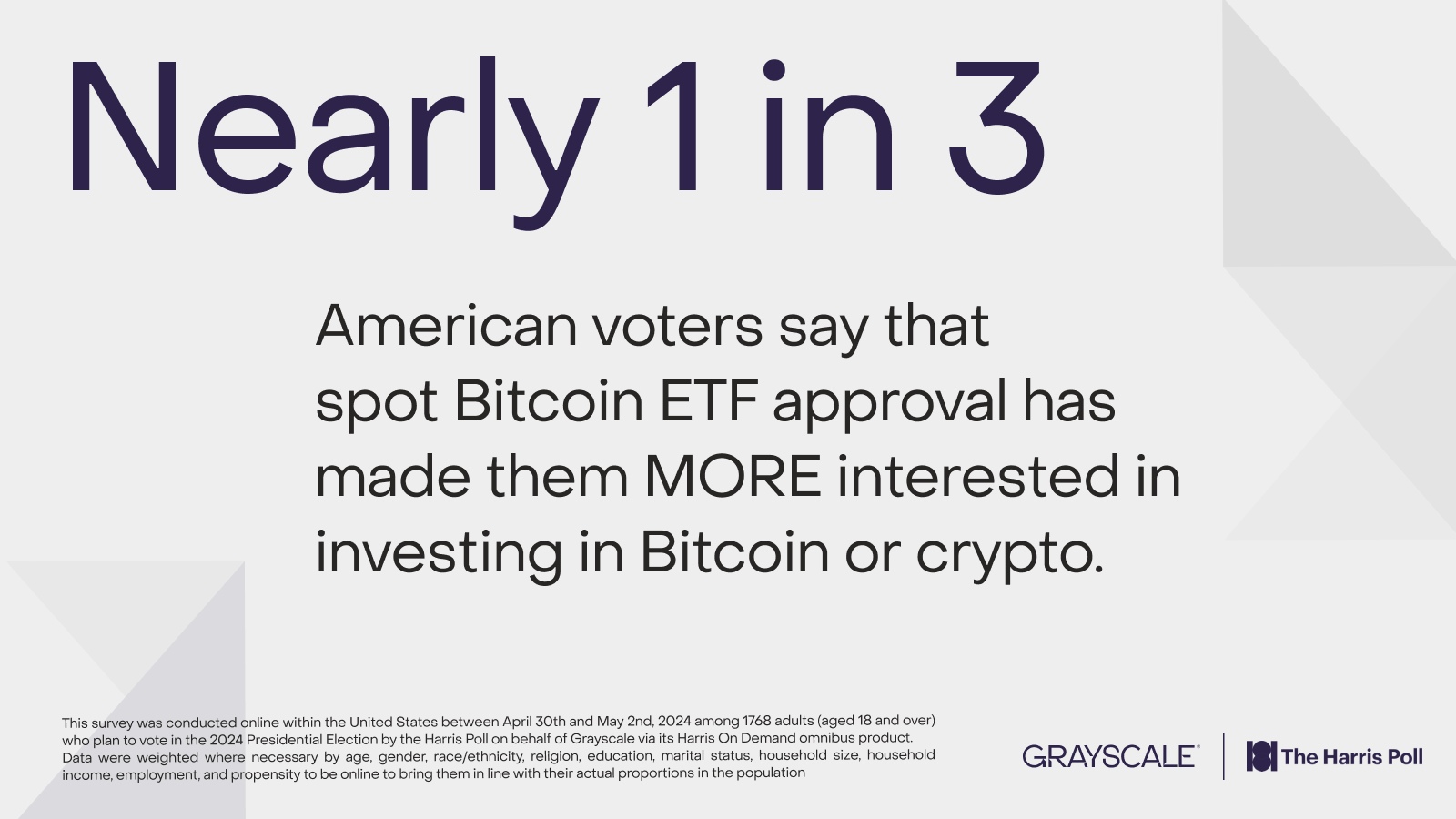
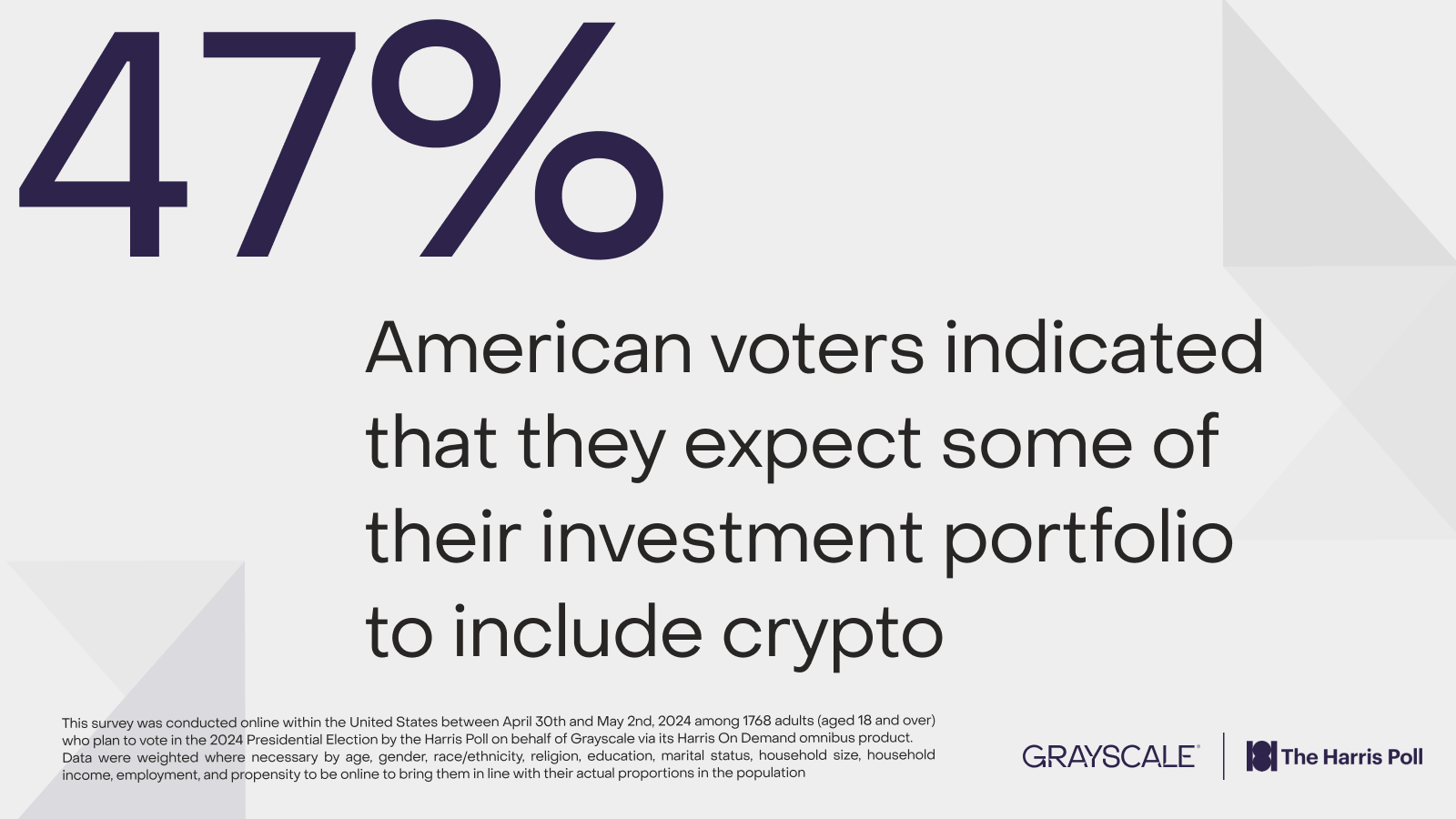
The source is a survey conducted by Harris Poll on behalf of Grayscale regarding voters in the 2024 US Election : 2024 Election: The Role of Crypto.
US Presidential Election and Crypto: A Strategic Alliance
American politicians, whether Republican or Democrat, are increasingly adopting pro-crypto stances. Donald Trump is positioning himself as the “crypto president,” while some Democrats are supporting legislative reforms favorable to the sector. Carole House, the author of President Joe Biden’s executive order to establish a regulatory framework for cryptocurrencies, has recently joined the White House, highlighting the growing importance of this sector.
Why is this happening? The demographics of crypto users now represent 15 to 20% of the American population. These voters, often young and politically centrist, are a valuable target for candidates. Consequently, cryptocurrencies have become an unavoidable theme in the upcoming presidential campaign in the United States.
The intersection of cryptocurrencies and politics is not just a trend; it’s a seismic shift in how we perceive and utilize digital assets in the socio-political landscape.
Scott Johnsson
Cryptos : A Double-Edged Political Asset
The adoption of cryptocurrencies by politicians could have lasting impacts on their popularity. Moe Vela, an advisor to Unicoin and former White House advisor, asserts that ignoring the importance of cryptocurrencies could be politically risky. The return of Carole House to the Biden administration reflects this growing awareness. However, this new relationship with crypto remains fragile.
If crypto prices plummet, politicians like Trump might quickly change their stance. Yet, as long as cryptocurrencies maintain their value, they will remain a financial asset for electoral campaigns. Some politicians might use crypto as a tactical distraction, but those attempting to exploit cryptocurrencies cynically risk facing an electoral backlash.
The increasing influence of crypto on American politics marks a turning point in electoral strategies. As politicians seek to capture the votes of crypto users, they must carefully navigate between the promises of electoral gains and the risks of inherent market volatility. The upcoming elections will be crucial for the future of cryptocurrencies and industry regulation in the United States, highlighting the strategic importance of this sector in the current political landscape.
Navigating the Future
Imagine a world where your digital assets not only hold financial value but also sway political outcomes. The United States presidential election isn’t just about choosing a leader; it’s about shaping the future of our digital economy. The power is in your hands—or more precisely, in your digital wallet. Let’s build something truly revolutionary together.
Post Views: 71